Have you ever sat in a concert hall and wanted to alter the music as it unfolds? What if the audience could collectively reshape a piece in real time? This work transforms that exact desire into reality. Rather than a fixed, traditional score, the music is generated in real time based on audience feedback. The piece is structured as an evolving process of repetitive patterns. Attendees influence the direction of the music via a web app: low ratings trigger a shift in the musical material, while high ratings sustain the current state. Liquid Listening transforms the stage into a listening laboratory, providing a unique listening experience.
Liquid Listening is a work for a live-generative system, live-electronics, and attendees’ participation. Liquid Listening is a Collaborative and interactive work created in real time through the self-evaluation of the work. Attendees will evaluate the work via a web app, and the musical generative system will change in real time based on the evaluation. The title of the work refers to the circular loop created between the attendees, the musical generative system, and their interconnection. This work belongs to a series of works in which the composer creates a self-referential musical generative system based on the real-time evaluation of the work. The main musical material of this work is its evaluation. The work duration is about 10 minutes. This work researches the influence of the evaluation of the work in the listening mode. The title of the work, Liquid Listening, refers to the listening mode that happens when attendees evaluate the work.
This work is a creative hybrid networked framework that integrates the musical generative system and its evaluation. Attendees, the generative system, and the musicians integrate into a hybrid, networked creative system. This work is at the same time a musical and a social experiment. The data from the evaluations of the attendees will be recorded, processed, and shared as Open Data. Live notation is not improvisation; the musicians are expected to play with as much precision as the events that they will receive on their mobile phones.

Liquid listening as an aesthetic-social experiment
From the perspective of a social-aesthetic experiment, this work researches three different aspects. First, we want to know if the same cooperative patterns are repeating in the different realizations of the work or if, in each realization, the evaluation of the attendees is completely different.
Second, we want to know if participation via the evaluation itself generates a new way of listening and engagement in the listening of the work. Do we listen in the same way when we are creating the work by changing the work through its very own evaluation? How does participation in the real-time evaluation of the work influence the listening of the work?
Third, is there something like a collective listening embodiment? Can we say that the attendees work as a collective embodied sensory system, or do they act individually?
Description of the project
The form and narrative of the work are the history of its evaluation. The formal development of the materials is not given a priori; it depends on the real-time evaluation of the attendees. The work is conceived as a loop between the generative system and the attendees.
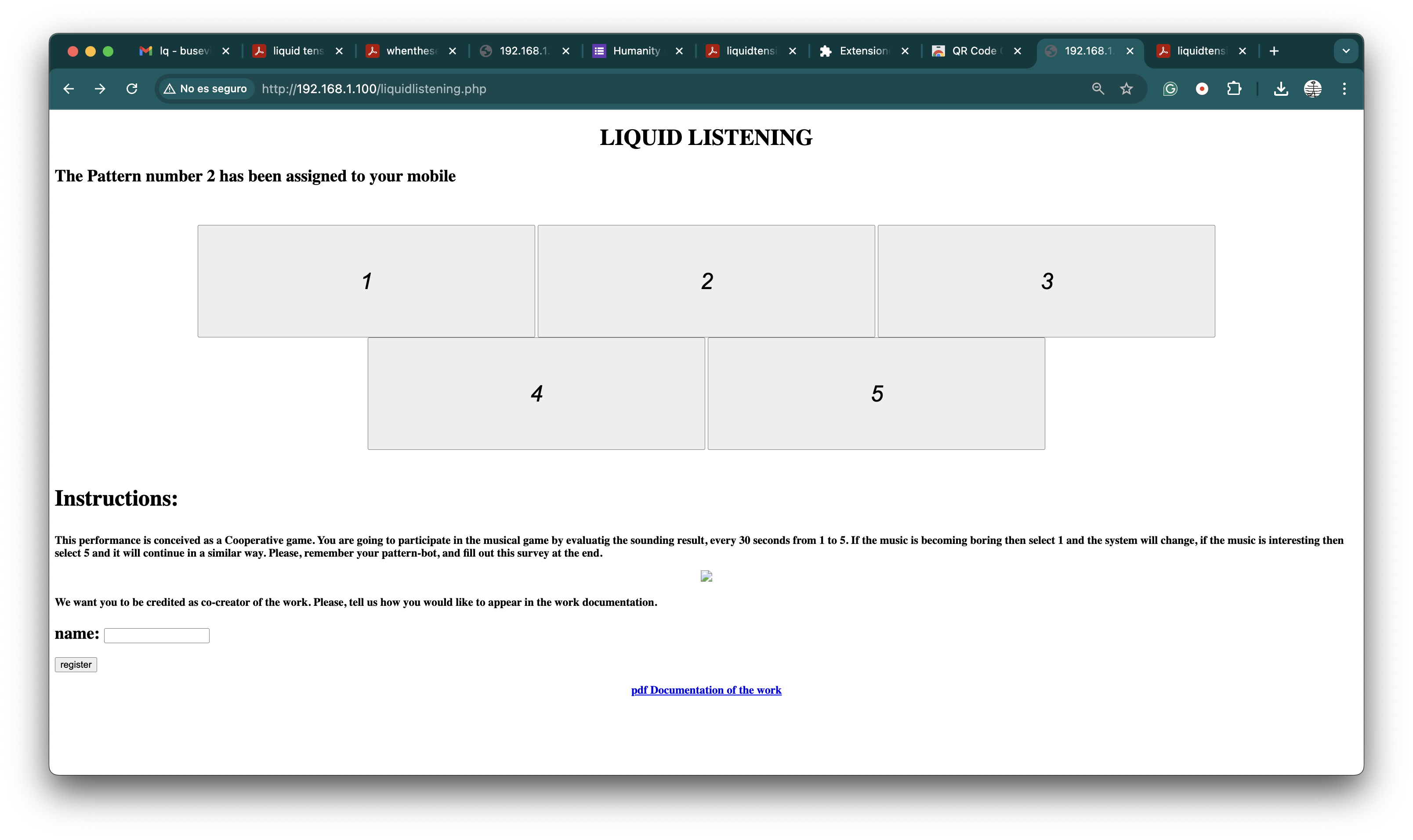
Fig. 1 This is the web application that the attending public will use to evaluate the work.
This Work is a circular, self-referential musical cooperative game. The attendees connect to a Wi-Fi network and then to a web server. They will interact with the system through a web page in which they will evaluate the resulting sound every 30 seconds. Then the generative system will react to the evaluations; if the evaluations are positive, the system will not change. If the evaluations are negative, the system will change, and the development of the material will change.
The generative system of the work consists of a series of pattern bots (each one implemented as an autonomous bot) that repeat at different times. Each time that a pattern begins its cycle, it measures its relative position (phase)regarding the other patterns and determines the value of the parameters of the events belonging to this pattern.
Every 30 seconds, the attendees evaluate the evolution of the work they will select 5 if they like it or 1 if they do not like it. This evaluation will change the velocity or repetition of their associated pattern-bot. This change will create a change in the work.
Some of the pattern-bots will control the instruments by sending them via a real-time notation system the notes to be played by the musicians via a real-time notation system. Other Agents will control the live electronic synthesis motor generation of the electronic sounds.
The notes created by the other pattern bots will be used as data creators that will interact with other pattern bots. This generative system is implemented in Max/Msp. The web server sends the evaluation data to the patch via OSC messages. Then the Max patch processes the information and sends OSC messages to the mobile phones of the musicians.
The generative system has been designed as a continuous process in which any of the elements is more important. This continuous process does not work as a traditional tensioning based on the properties of materials, but as a set of pattern–layers that superimpose, generating cognitive tensioning depending on the interpretation of the superposition of the different pattern layers. The engagement of the listener with the work does not depend on the properties of the materials, the form, or the densities of materials that are more or less equal during the work, but on the cognitive stress generated by the shifting patterns. So the final tensioning of the work depends on the interpretation of the superposition of the different pattern layers. This work belongs to a series of works that share in common the integration of evaluation in the creative framework. In each one of the works, a different relationship between the number and type of musician related to how the evaluation changes the generative algorithm. This Generative algorithm has been published in papers. The reference is omitted for anonymization.
References
- [1] Egido, F. Artificial Computational Creativity based on Collaborative Intelligence (2020). Presented at the Artificial Intelligence Music Creativity 2021, Graz.
- [2] Egido, F. Taxonomy of Listening Tensioning based on Cognitive Dissonance (2024). J of Electron Sci and Electrical Res 3(1), 01-07. Lectured at the Bled Contemporary Musical Week 2025.
- [3]Egido, F. Towards an Aesthetics of Cognitive-Parametric Music (2011).
- [4] Egido, F. Using a Distribution Probability Follower in MAS Works (2018). Presented at the Korea Electro-Acoustic Music Society’s Annual Conference 2019.
Similar Works
- Liquid Tensioning 2026)(
- Humanity as A Sensory System (2026)
- When the Self of Us Becomes Ours (2025)
- The Human in the Loop (2025)
- Public stage ( 2023)

